When Roy Ee started his career as an air-conditioning technician, becoming a Managing Director was not part of the plan.
His focus was much more immediate: becoming technically competent, learning the fundamentals of facilities management and creating opportunities to progress.
More than two decades later, Roy has taken on the role of Managing Director, Integrated Services. But the more interesting story is not simply how far he has progressed. It is what enabled that progression, what he learnt along the way, and how those experiences now shape the opportunities he wants to create for others.
A career doesn’t have to be mapped out from the beginning
Roy is candid that his first position was not where he ultimately wanted to remain.
The turning point came when he made a conscious decision to develop himself and pursue a different path.
“The key moment came when I decided that I did not want to remain an air-conditioning technician for the rest of my career. That decision gave me the determination to keep learning and take on new challenges.”
Roy Ee, Managing Director (Integrated Services)
For those who worked with Roy earlier in his career, that willingness to learn was already evident.
“What stood out early on was Roy’s willingness to learn and take on new responsibilities. He was always looking beyond the immediate task and asking what else he could learn.”
S Radha, Senior Engineer
That combination of personal drive and support from within ENGIE became central to Roy’s progression. Early in his career, a supervisor recognised his potential and gave him opportunities to move beyond a purely technical role and take on greater responsibility. As his experience grew, so did the scope of the roles entrusted to him.
“One of the biggest risks in any career is becoming complacent. Every new role opens the door to greater knowledge and new opportunities to learn.”
Technical experience doesn’t get left behind when you become a leader
Roy’s operational background remains part of how he approaches leadership today.
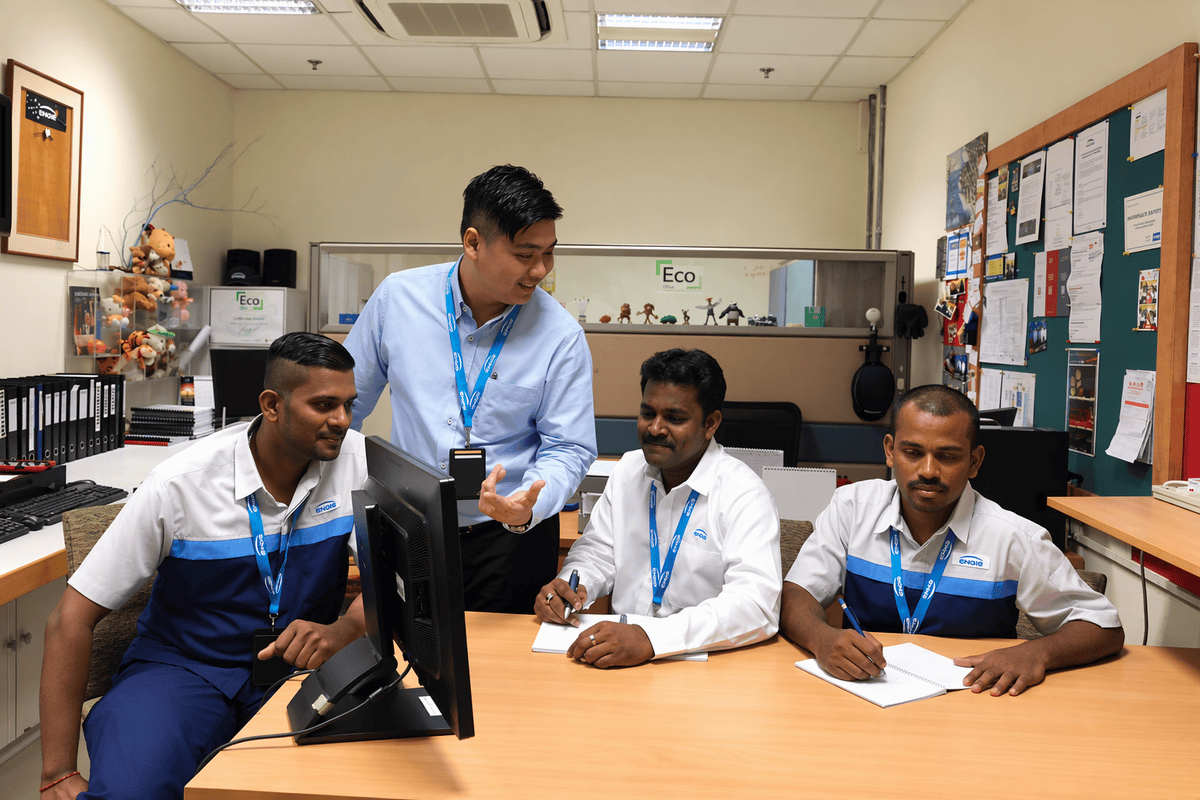
Having worked in roles similar to those of many of the people he now leads gives him first-hand familiarity with the realities of delivering FM on the ground.
“Having worked in many of the roles that I now oversee gives me an understanding of the pressures and expectations our teams face. Being able to relate to those experiences helps me make better-informed decisions.”
That ground-up perspective applies to clients too. Facilities management, in Roy’s view, works best as a partnership, built on understanding each client’s operational realities, priorities and constraints.
That connection to operations remains visible to those working with Roy today.
“Roy’s operational background keeps him connected to what happens on the ground. He understands the practical realities behind the decisions we make and the challenges our teams manage every day.”
David Chau, Head of Government, Commercial & Business, Integrated Services
For Roy, that makes strong technical foundations more relevant, not less.
And the profession itself is changing. Sustainability, technology, data and AI are creating new possibilities for how facilities are operated. Increasingly, the opportunity is not simply to maintain equipment, but to understand how assets are performing and how their efficiency and reliability can be improved.
Creating the next generation of FM careers
Perhaps the most interesting part of Roy’s story is where it comes full circle.
He began as a technical practitioner looking for opportunities to grow. Along the way, ENGIE gave him opportunities to broaden his experience, take on greater responsibilities and develop beyond his original technical role.
Today, as a business leader, he is thinking about how the FM industry can create those opportunities for others.
For colleagues who have benefited from Roy’s experience, that commitment to development is already tangible.
“Roy’s leadership is defined by his ability to provide clear direction while entrusting his team with the autonomy to lead, grow and deliver. He believes trust must be earned and, through this principle, has built a culture of accountability, ownership and excellence. He puts people first, fostering a positive and supportive work environment. Generous in sharing his experience and insights, broadening their perspectives to succeed in their roles.”
Roy believes the sector needs to address a fundamental challenge: attracting and developing the people it will need for the future.
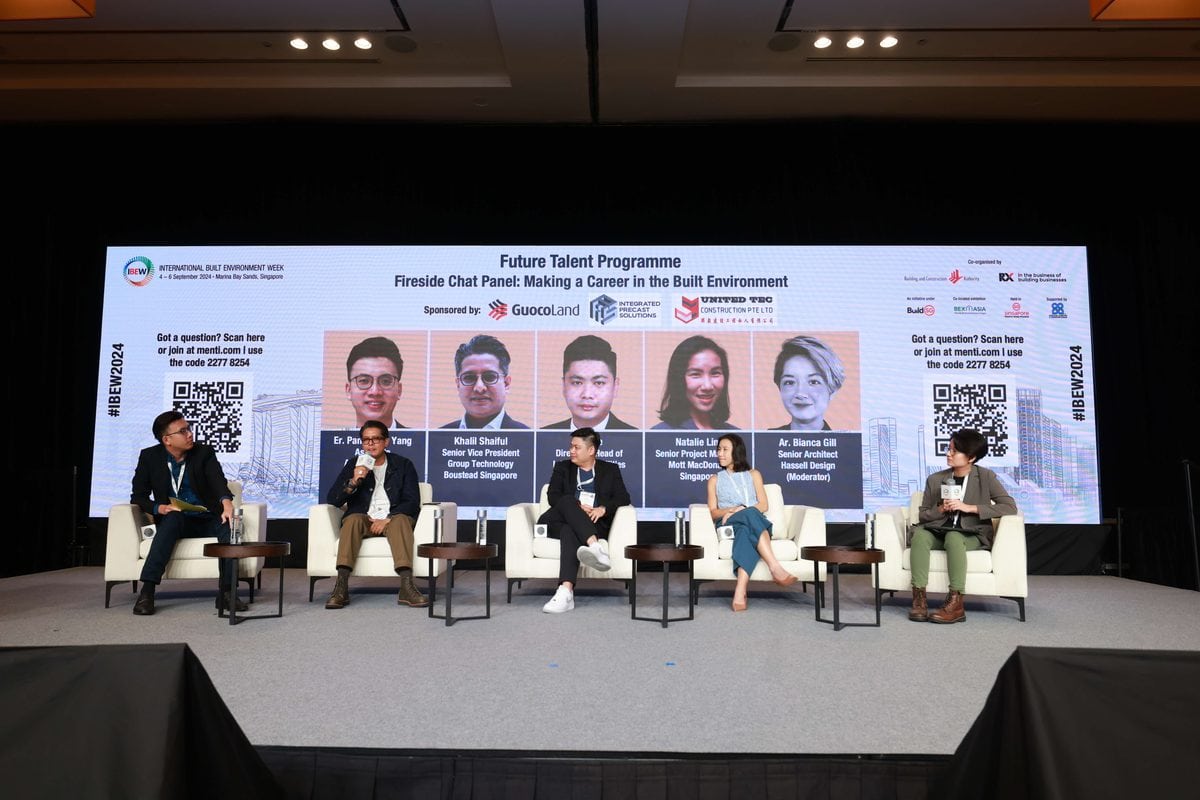
Through his involvement with SIFMA’s Talent Engagement and Development Committee, he is contributing to efforts to engage and support emerging talent entering the FM sector.
“AI and technology will be an important focus for the built environment, but the FM industry is also facing a shortage of people. We need to attract talent into the industry, retain them and support them to build successful careers.” Roy Ee, Managing Director (Integrated Services)
For people beginning in technical or operational roles today, Roy’s own experience carries a simple message: your starting point does not have to determine where you finish.
Facilities management is multidisciplinary, with career pathways spanning engineering, operations, sustainability, technology, client management and leadership.
Roy’s journey at ENGIE is one example of what is possible when personal determination is matched with opportunities to learn, develop and take on greater responsibility. Looking back, he is also grateful for the support of his wife throughout the years, alongside the colleagues and mentors who encouraged his development and gave him opportunities to grow.
Having benefited from that support, trust and investment in his own development, Roy is now focused on creating similar opportunities for the next generation, helping others build their own paths in facilities management.